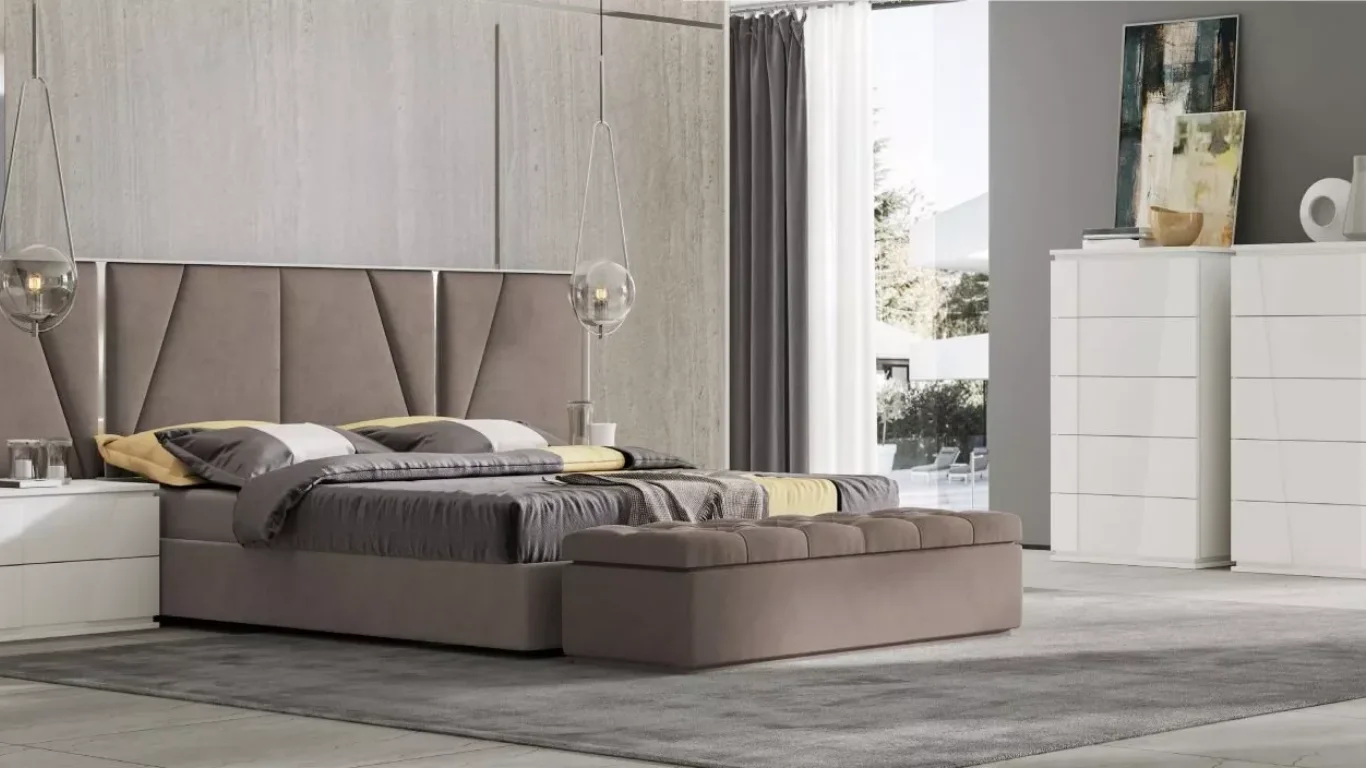
Most bedrooms are designed backwards. The bed, the colours, the lamps, and then, with the room nearly finished, someone asks where the clothes will actually live. So decide storage first: built-in wardrobes for awkward rooms and homes you plan to stay in, freestanding pieces for flexibility and character, and in either case measure what you own before choosing anything. That order alone prevents most of what goes wrong.
We know, because the evidence walks into our showrooms every week, usually in photograph form. A beautiful bedroom, recently finished. And a chair in the corner buried under clothes.
The chair knows the truth
That chair is not a tidiness problem. It is a measurement problem, and the person who owns it did nothing wrong; the wardrobe was sized to fit the room, not the life inside it.
When we plan a bedroom we count storage the unglamorous way: metres of hanging rail, long and short, then folded piles, shoes, and the suitcases nobody thinks of until they are on top of the wardrobe forever. The total is almost always more than the client guessed. The old wardrobe was built on the guess.
Do the count before you fall in love with any piece of furniture. It takes twenty minutes and it decides everything after it.
Built-in or freestanding
Built-in wins where the room is awkward. Sloping ceilings, alcoves, the dead half metre between window and wall that no factory-made wardrobe will ever fill. Floor to ceiling means no dusty top and roughly a third more capacity from the same footprint, which in a small bedroom is not a detail. In a home you intend to keep, fitted storage stops being furniture and becomes architecture; it is the version we build most often through our bespoke furniture service.
Freestanding answers different questions. It moves house with you. It brings character that fitted doors rarely manage, an old armoire, a mid-century chest of drawers, and in a bedroom with height and floor to spare it furnishes the room rather than merely serving it.
For many bedrooms the honest answer is both: fitted where the walls are awkward, one freestanding piece where the eye needs somewhere to land.
The doors get the attention. The inside does the work.
Sliding doors save floor space and hide everything; hinged doors show a whole section at once and never jam with sand in the track. Choose by the room, not by fashion.
But daily comfort is decided inside. Drawers beat deep shelves for anything folded, every time; a deep shelf is where clothes go to be forgotten. A second rail doubles short-hanging capacity in the same width. A small light that comes on with the door costs very little and changes winter mornings entirely.
And on this coast, ventilation is not optional. A sealed wardrobe against an exterior wall, in a house closed up between visits, is exactly where mould starts. For homes near the sea we specify vented doors or leave the interior room to breathe, and we suggest it even when nobody asks.
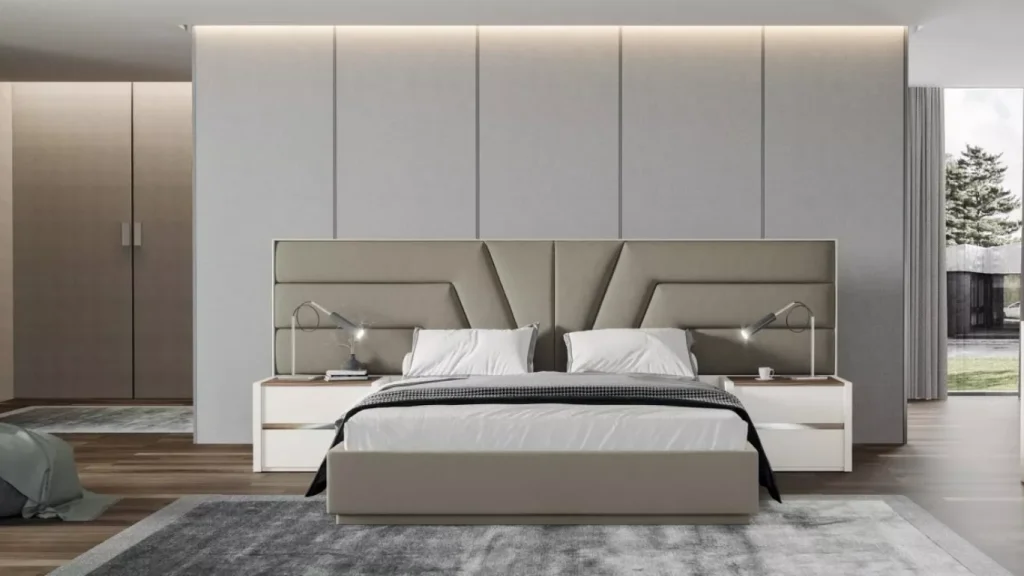
If the bedroom hosts guests
A wardrobe in a holiday home has one extra job: being empty. Guests who find no space live out of suitcases for a week, and it finds its way into reviews with surprising regularity. An empty guest wardrobe with proper hangers, plus one locked cupboard for the owner’s things, solves it cleanly. The rest of that subject has its own article, on furnishing a holiday rental.
Bespoke sounds like a luxury word. In practice it often costs about the same as two factory wardrobes that almost fit, and it is the only route when the wall is 227 centimetres and the catalogue stops at 200. We design and fit wardrobes to measure, and our bedroom collection is in both showrooms to argue the aesthetics in person. Bring the measurements of the awkward wall to Albufeira or Armação de Pêra. Twenty minutes of counting, remember, and then the pleasant part.


