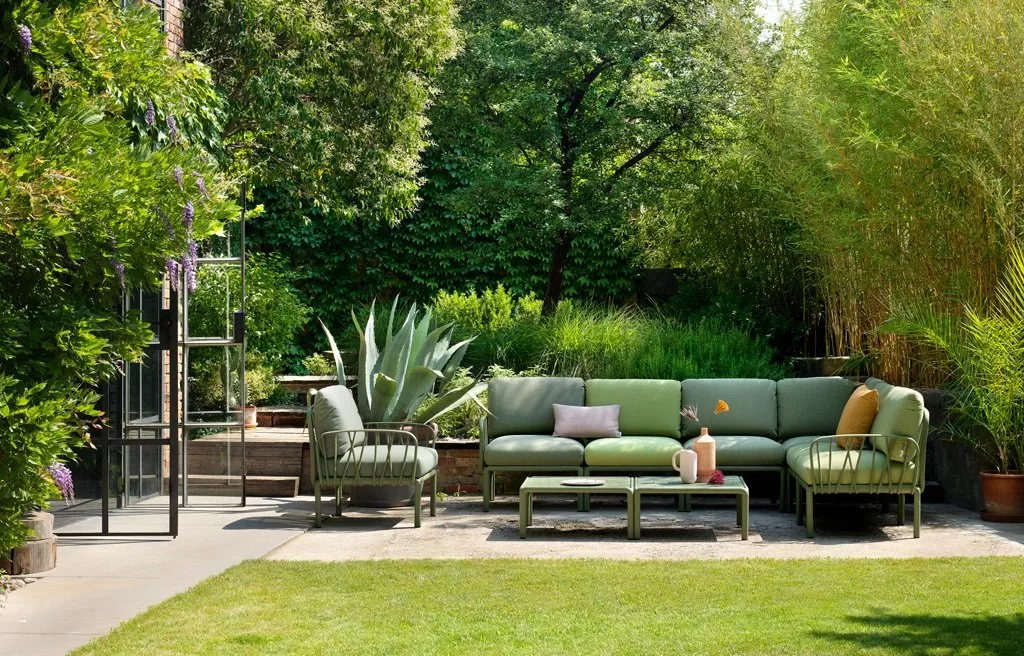
People shopping for garden furniture here worry about the wrong weather. They ask about rain. Two decades on this coast and we can count the pieces rain has ruined on one hand.
Sun is another story. Three hundred days of it, give or take, is the local boast, and it works on furniture the whole time: bleaching cushions in a single season, making cheap plastic brittle by the second summer, opening cracks in woods that were never meant to live outside a dining room. Buy for that first. Style second. The consolation is that the materials which survive here happen to be the beautiful ones anyway.
What lasts
Teak, mostly. Dense enough to shrug off UV, needs almost nothing from you, and slowly goes that silver grey that photographs so well against a white wall. Some clients fight the greying and oil it back to honey every spring. We have stopped arguing with them; both are right, one is more work.
Powder-coated aluminium is the other frame we trust, partly because it stays cool enough to handle in August and weighs little enough that moving the table for dinner is not a project. Synthetic fibre, yes, with a warning attached: decent and cheap synthetic rattan look identical in the shop. By the third summer one of them is fraying and the colour has gone flat, and by then the receipt is long lost.
Untreated steel we simply do not sell for outdoor use here. The coastal air gets at it faster than most people believe; the salt question got its own treatment in the piece on furnishing a holiday rental, so we will not repeat it. But the quiet heartbreaker is fabric. A cushion whose colour sits on the surface of the fibre gives it up to the light, season by season, and most cushions are made exactly that way. Solution-dyed acrylics carry the colour through the fibre itself. They cost more. They are also the only ones still recognisable in year four.
All of which assumes the furniture spends its afternoons in full sun. It should not have to.
Shade is furniture too
Nobody sits on a terrace at four in July without shade, which makes it strange how often it gets decided last, after the sofa, after the planters, sometimes after the first sunburnt lunch. A pergola changes how a house is used more than almost anything else you can add outside. If the terrace wants its winter sun back, a retractable awning does the same job part-time.
Parasols we sell happily, with one condition: a heavy base, a tilting head, and fabric that will not be pink by August. The ten-euro version is a different product that happens to share the name.
The winter argument
This is the part visitors take longest to believe. Lunch outside in January is normal here. Not brave, not optimistic. Normal. A terrace set in the Algarve works eleven months a year, and once you divide the price by the use, the better piece usually turns out to be the cheaper one.
Winter still asks for small habits: cushions into a storage bench when storms come through, a cover over anything fabric during the wet weeks. That is more or less the whole list.
And none of this requires a villa garden. Plenty of the terraces we furnish are apartment balconies with room for exactly one good decision: a bistro table and two chairs that fold, or a narrow bench with storage inside, plus one plant too big to be sensible. Balconies furnished with intention beat gardens furnished with leftovers. They are also the cheapest transformation in the whole house, which nobody ever seems to expect.
Our outdoor collection is in both showrooms, Albufeira and Armação de Pêra. Teak, aluminium, the fabrics that keep their colour; the same shortlist this article has been arguing for, because we stock what we defend. Delivery and assembly are ours, across the Algarve and beyond. Come and sit in the teak before the summer ends. It makes the argument better than we do.
